Reader-supported: As an Amazon Associate I earn from qualifying purchases. The picks are mine, affiliates don't pay for placement and don't shape what I recommend.
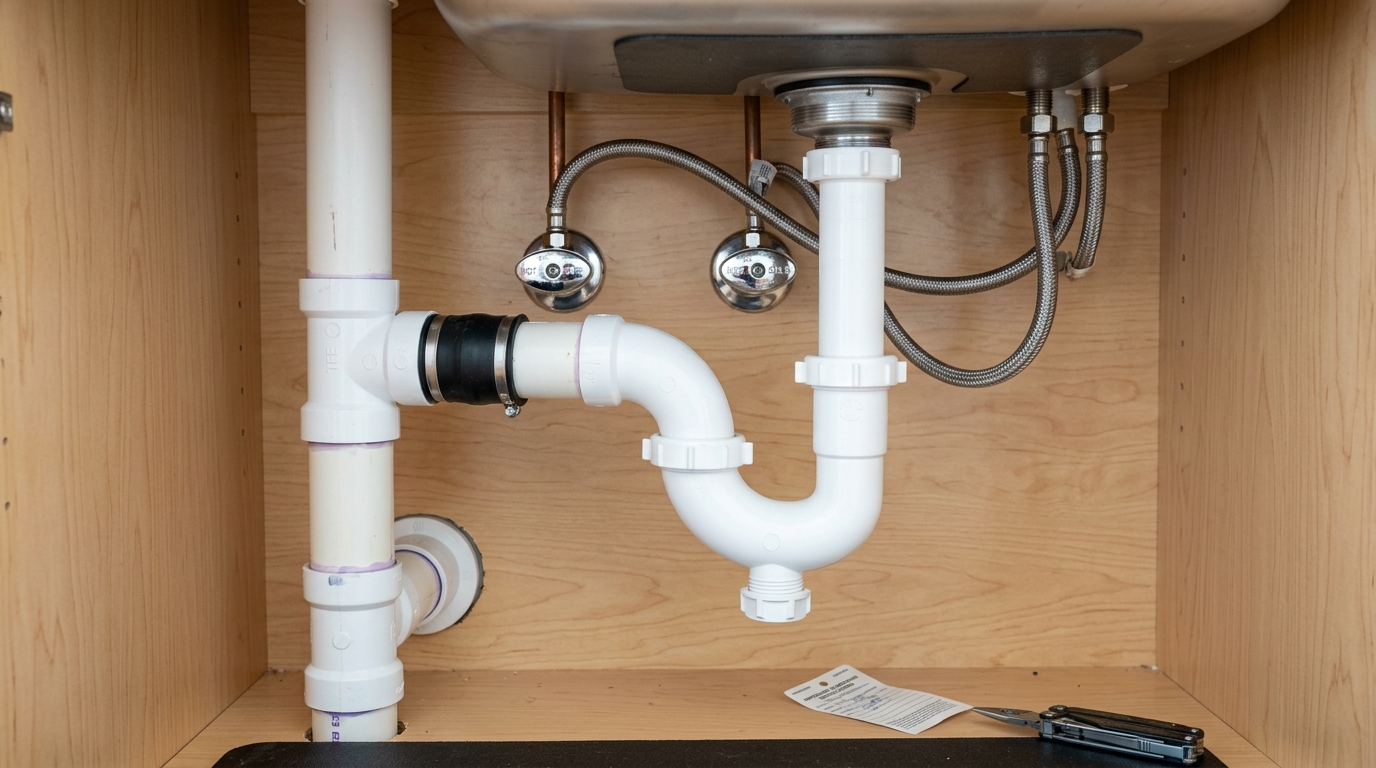
Never let Teflon tape overhang the end of the pipe! When you screw the fitting down, the exposed tape edge is sheared off by the internal female threads. Those plastic ribbons travel downstream through the pipe and wedge directly into gas appliance solenoid valves, tankless water heater flow turbines, or boiler zone valves, causing complete equipment failure or dangerous valve hang-ups.
How NPT pipe threads seal (and why you need sealant)
American pipe fittings use National Pipe Taper (NPT) threads, cut on a 1-degree 47-minute taper (roughly 3/4 inch per foot). As a male pipe is screwed into a female fitting, the diameters converge until the thread flanks crush together.
However, metal cutting dies leave microscopic tool marks and spiral voids between the thread crests and roots. Without a sealant, high-pressure water, natural gas, or compressed air finds that continuous spiral channel and seeps out. Thread sealants serve two distinct functions:
- Lubrication: Teflon (PTFE) reduces friction between metal threads, allowing you to turn the fitting deeper into the taper to achieve true metal-to-metal mechanical engagement without galling or seizing.
- Void Filling: The malleable polytetrafluoroethylene film or thick anaerobic paste fills every microscopic tooling flaw, creating an impenetrable barrier against hydraulic or pneumatic pressure.
PTFE Teflon tape color codes: know what you are wrapping
| Tape Color | Density & Thickness | Approved Application |
|---|---|---|
| White | Single-density (thin, 0.0035") | Potable cold and hot water lines up to 3/8" NPT only. |
| Pink | Triple-density (heavy-duty, 0.004") | Commercial water lines, hydronic heating loops, large 1"+ NPT. |
| Yellow | Double-density (gas rated) | Mandatory for natural gas, propane (LPG), and fuel oil. |
| Green | Oil-free certified | Medical gas lines, pure oxygen, and cleanroom pneumatic systems. |
The 3 best professional pipe thread sealants
RectorSeal T Plus 2 Non-Hardening Thread Sealant (with PTFE)
The standard in our commercial mechanical rooms for decades. Formulated with pure PTFE particles suspended in an advanced non-setting resin base. Pressurize immediately up to 10,000 PSI for water and 2,000 PSI for gases. It never hardens, cracks, or shrinks, allowing easy disassembly even 20 years later.
Approved for: Natural gas, LP gas, potable water, steam up to 100 PSI, refrigerants, and compressed air. Lead-free and non-toxic.
Mill-Rose Blue Monster Heavy-Duty PTFE Thread Sealant Tape
Forget cheap grocery-store white tape that tears like wet tissue. Blue Monster is a professional-grade, extra-thick polytetrafluoroethylene tape that won't shred or stretch thin over sharp pipe threads. Requires fewer wraps to achieve a leak-free seal on rough iron or stainless steel threads.
Field specs: Thickness 0.0035", works from -450°F to +500°F, compatible with all metal and plastic threaded connections.
Gasoila Soft-Set Pipe Thread Sealant Paste
Engineered specifically for petroleum, gasoline, diesel, and high-vibration equipment connections (generator fuel feeds, oil burner lines, air compressor manifolds). Sets to a firm, pliable paste that withstands severe mechanical vibration without cracking.
The union pro technique: belt-and-suspenders
When union stationary engineers install threaded gas lines behind finished commercial ceilings or hydronic steam connections that must never leak, we use the belt-and-suspenders method:
- First thread bare: Always start your tape on the second thread back from the end of the pipe. Never wrap over the front face.
- Three clockwise wraps: Apply exactly three tight wraps of yellow gas tape (or pink water tape), pulling with tension so the tape sinks into the thread grooves.
- Brush of paste: Dip your brush into RectorSeal T Plus 2 and spread a thin, smooth coat of paste over the wrapped tape. The tape provides lubricity and fills gross gaps; the paste fills any microscopic pores in the tape.
- Torque once: Tighten with a proper 14" or 18" pipe wrench. Once you feel the taper lock, stop. Never back a threaded joint off to align a handle; if you overshoot alignment, unscrew completely, clean the threads with a wire brush, and re-seal from scratch.
Frequently asked questions
Can you use white Teflon tape on natural gas lines?
No. Standard white Teflon tape is single-density tape intended only for potable water lines. Natural gas and propane require thicker, double-density Yellow PTFE tape rated under UL standard 132 or CSA approval, or a dedicated gas-rated pipe thread sealant paste. White tape is too porous and can permit micro-leaks under gas pressure.
Is pipe dope better than Teflon tape?
For commercial piping and threaded metal gas lines, pipe dope (thread sealant paste) is superior. It fills microscopic voids in tapered NPT threads, never dries out or hardens, acts as a high-pressure lubricant during assembly, and will not shred or flake off into downstream valves, regulators, or hydraulic pumps.
Can you use both Teflon tape and pipe dope together?
Yes. Known in union commercial trades as the belt-and-suspenders method, applying 3 tight clockwise wraps of PTFE tape followed by a thin brush coat of non-hardening pipe dope paste over the tape threads provides maximum seal integrity on high-pressure water, hydronic boiler lines, and commercial gas piping.
Which direction do you wrap Teflon tape on pipe threads?
Always wrap tape in a clockwise direction when looking directly into the open end of the male threaded pipe. Wrapping clockwise ensures that as you screw the male pipe into the female fitting, the threading action smooths and tightens the tape. Wrapping counter-clockwise causes the fitting to catch the tape edge and bunch it up.
Related guides
- Water heater leaking?, fixing threaded nipple and drain valve drips.
- PEX vs copper pipe, fittings, expansion, and crimping compared.
- How to flush a tankless water heater, servicing isolation valves and service ports.
- Why is your furnace banging on startup?, delayed ignition and gas valve checks.
Editorial standards: Conforms to ASME B1.20.1 (Pipe Threads, General Purpose, Inch) and UL Standard 132 (Thread Sealing Compounds). Reviewed by Al, Building Doctor, IUOE Local 39 Stationary Engineer.