Reader-supported: As an Amazon Associate I earn from qualifying purchases. The picks are mine, affiliates don't pay for placement and don't shape what I recommend.
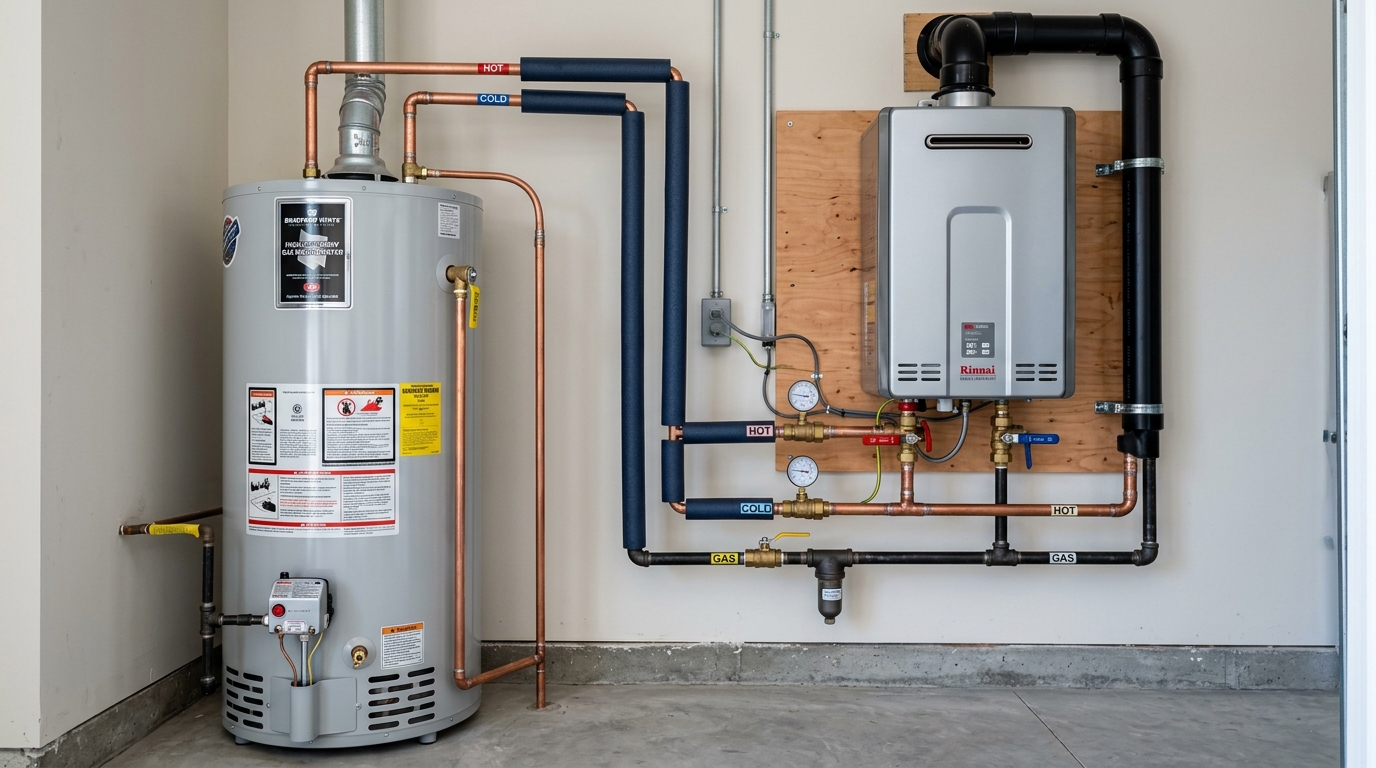
Never run PEX piping outside where it receives direct sunlight. UV rays break down the molecular polymer chains in polyethylene, causing brittleness and catastrophic micro-cracking in as little as 30 to 60 days of exposure. Outdoor risers, hose bibbs, and water meter entries must remain rigid metallic copper.
The physical differences: copper durability vs PEX flexibility
Traditional rigid copper (Type L is standard for residential interior supply; Type M is thinner budget pipe) is rigid, biostatic (naturally resists bacterial growth), and fire-impervious. It will never leach chemical odors into standing water. However, copper has three major vulnerabilities:
- Water Chemistry Corrosion: If your well or municipal water is slightly acidic (pH below 6.8) or high in chloramines, it corrodes the interior copper walls, causing greenish-blue staining on fixtures and microscopic pinhole leaks inside finished drywall.
- Freeze Vulnerability: When water freezes inside rigid copper, it expands by 9%. Copper cannot stretch; the pipe splits lengthwise, resulting in a flooded house the moment the line thaws.
- Labor & Material Cost: Sweating copper fittings requires open torches, flux, lead-free solder, fire permits, and extensive wall demolition to snake rigid 10-foot sticks through framing studs.
PEX (cross-linked polyethylene) solves all three issues. It is flexible enough to snake through wall cavities like electrical Romex cable, uses zero open flames, resists scale buildup, and can expand up to 300% of its volume during a freeze without bursting.
PEX-A vs PEX-B: the critical flow difference
The biggest trap for DIYers is treating all PEX as identical. The letter indicates the manufacturing cross-linking method, not a quality grade:
Manufactured using peroxides, achieving 85% cross-linking. PEX-A has true thermal shape memory: you expand the pipe and an expansion ring using a mechanical expansion head, insert an oversized fitting, and the pipe shrinks back to grip the fitting. Key benefit: The fitting inner diameter (ID) matches the pipe ID, so there is zero flow restriction or water pressure drop.
Manufactured using moisture-cure silane, achieving 65-70% cross-linking. PEX-B is stiffer and does not have thermal memory. It uses smaller barbed insert fittings that slide inside the pipe and are held with external crimp rings. Key tradeoff: The brass fitting wall thickness reduces the inner pipe diameter by roughly 20% to 25%. If you plumb an entire bathroom manifold in 1/2" PEX-B with multiple barbed 90s, dynamic pressure drops noticeably when two fixtures run simultaneously.
PEX vs copper engineering comparison matrix
| Parameter | PEX-A (Expansion) | PEX-B (Crimp/Clamp) | Type L Copper |
|---|---|---|---|
| Material Cost | Low (~$0.45 / ft) | Lowest (~$0.35 / ft) | High (~$2.20 / ft) |
| Tool Investment | $120 manual / $450 power | $35 manual crimp tool | $50 torch kit / $2,000 ProPress |
| Freeze-Thaw Resistance | Excellent (elastic expansion) | Good (fitting joints can pop) | Poor (splits along seam) |
| Acidic Water Resistance | 100% immune to pitting | 100% immune to pitting | Susceptible to pinhole leaks |
| Fittings Flow Restriction | Zero restriction (full bore) | ~20% ID restriction | Zero restriction (streamlined) |
| Fire / Heat Resistance | Melts at 200°F+ (requires clearance) | Melts at 200°F+ (requires clearance) | Non-combustible |
| Rodent Resistance | Vulnerable to mice chewing | Vulnerable to mice chewing | 100% rodent proof |
Recommended tools & fitting systems
Uponor ProPEX PEX-A System (Expansion Rings & Fittings)
The system chosen by union mechanical contractors for commercial high-rises and custom residential. You cannot over-tighten or under-crimp a ProPEX fitting; the physics of polyethylene memory does the sealing. Full-port brass and engineered polymer (EP) fittings ensure maximum water volume.
iCrimp PEX Crimp Tool Kit (Angle Jaw with Go/No-Go Gauge)
If you choose PEX-B for cost and accessibility, this full-cycle ratchet crimper handles both 1/2-inch and 3/4-inch copper crimp rings with calibrated jaws. Includes the essential go/no-go inspection caliper to verify every joint meets ASTM F1807 standards.
Frequently asked questions
Is PEX better than copper for residential plumbing?
For 90% of residential retrofits and repipes, PEX-A is superior. It costs 60% less in materials, installs four times faster with fewer buried joints, resists acidic water pinhole corrosion, and expands up to three times its diameter before bursting in freezing temperatures. Copper remains king for exposed utility rooms, water heater connections, and outdoor UV exposure.
What is the difference between PEX-A and PEX-B?
PEX-A is manufactured using the Engel method, resulting in 85% cross-linking and thermal memory. It uses cold expansion fittings (Uponor ProPEX) that do not restrict water flow. PEX-B uses the silane method (65-70% cross-linking) and relies on insert fittings with copper crimp rings or stainless cinch clamps that reduce internal pipe diameter by about 20% at each fitting.
Can you connect PEX directly to a water heater?
No. Uniform Plumbing Code (UPC) requires at least 18 inches of metallic piping (copper or corrugated stainless steel) directly connected to a water heater before transitioning to PEX. Radiant heat from the flue exhaust on gas models and high-temperature thermal stacking can degrade plastic pipe.
Are push-to-connect SharkBite fittings reliable behind walls?
SharkBite fittings are code-approved for concealed locations, but experienced trade engineers use them primarily as temporary emergency caps or transition unions in accessible spaces. For permanent in-wall piping, full PEX-A expansion or PEX-B copper crimp joints eliminate reliance on rubber O-rings that can degrade over 25 years.
Related guides
- How to shut off water to your house, emergency isolation protocols.
- Water heater leaking?, diagnosing connections, relief valves, and tank failure.
- Low water pressure in whole house?, PRV diagnosis vs pipe scale buildup.
- Best sump pump check valves 2026, silent spring-loaded vs swing flappers.
Editorial standards: Tested against ASTM F876 (PEX specification), ASTM F1807 (metal crimp fittings), and UPC 604.13 installation regulations. Reviewed by Al, Building Doctor, IUOE Local 39 Stationary Engineer.