Reader-supported: As an Amazon Associate I earn from qualifying purchases. The picks are mine, affiliates don't pay for placement and don't shape what I recommend.
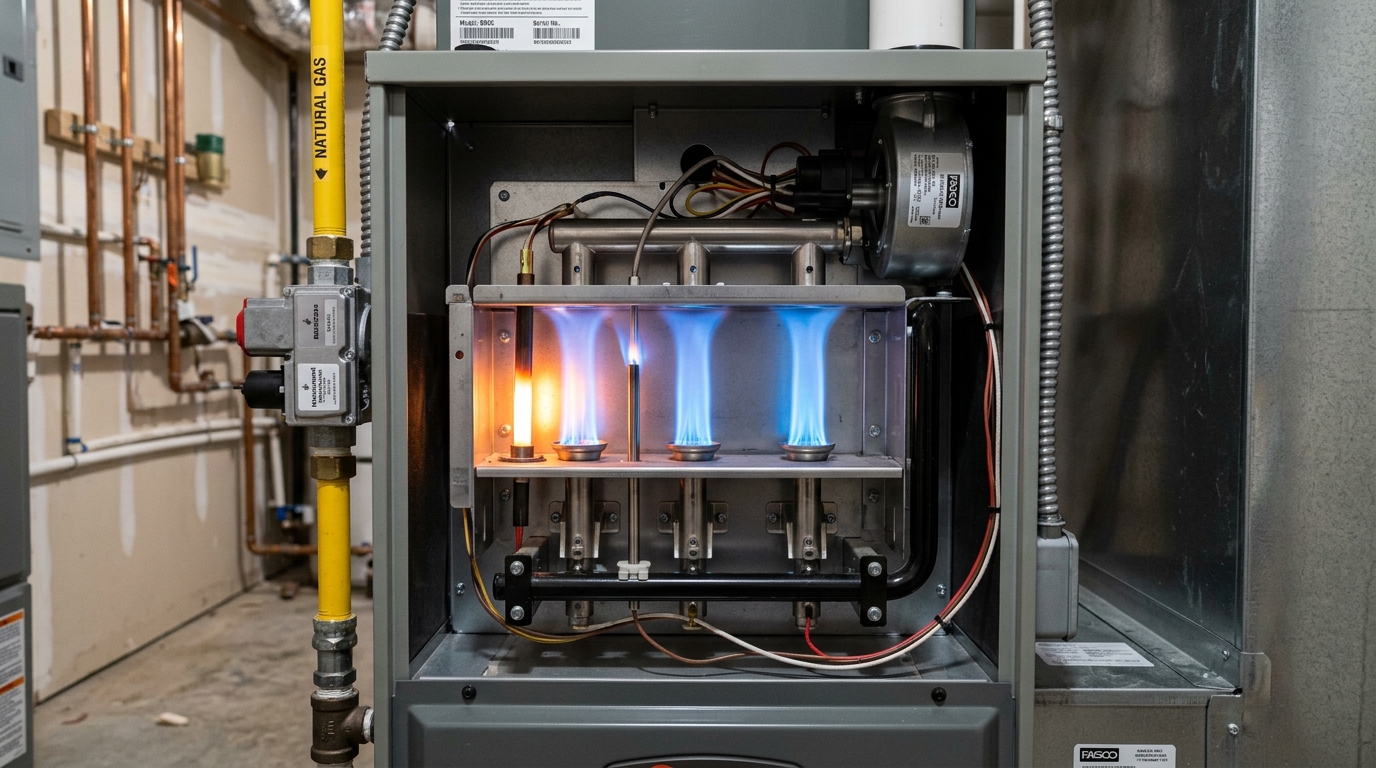
Over 75% of "furnace overheating" and "frozen evaporator coil" service calls I handled began with an over-restrictive 1-inch MERV 13 filter loaded with dust. Your residential blower fan operates on a tight static pressure budget (typically 0.50 inches of water column total for the whole duct system). A choked filter robs half that budget at the intake alone.
The static pressure trap: why higher MERV isn't always better
MERV stands for Minimum Efficiency Reporting Value, rated on an ASHRAE 52.2 scale from 1 to 16. As MERV increases, the woven synthetic fibers become tighter and more compact to trap microscopic particles like bacteria and smoke. But tighter fibers mean higher resistance to airflow.
When you place a dense 1-inch MERV 13 filter into a duct designed for free-flowing air, your blower motor has to work twice as hard to pull the required cubic-feet-per-minute (CFM) across the heat exchanger. The results in the field are predictable:
- In Summer: Restricted airflow over the indoor cooling coil prevents heat absorption. The refrigerant temperature drops below 32°F, freezing ambient moisture into an insulating block of solid ice across your coil fins.
- In Winter: Low airflow traps combustion heat inside the furnace heat exchanger. When temperatures spike above 180°F, the safety high-limit switch trips, shutting off the gas valve and leaving you in the cold.
- Year-Round: Permanent split capacitor (PSC) blower motors overheat and burn out winding insulation, leading to a $600 to $1,200 motor replacement.
The 3 best furnace air filters (2026)
FilterBuy MERV 8 Pleated AC / Furnace Filter (4-Pack)
The perfect balance of equipment protection and airflow longevity. FilterBuy manufactures these in the USA using electrostatically charged, industrial-grade beverage board frames that won't warp or buckle under blower suction. At MERV 8, it captures 90% of household dust, lint, mold spores, and pet hair without stressing the fan motor.
Field spec: Initial resistance of just 0.18 in. w.g. at 300 FPM face velocity. Available in virtually every common dimension (16x25x1, 20x20x1, 20x25x1).
Nordic Pure MERV 11 Tru Mini Pleat Clean Air Filter
If you have multiple dogs or seasonal pollen allergies and must have higher filtration in a standard 1-inch slot, Nordic Pure uses mini-pleat technology to pack more square footage of media into the frame. This distributes the pressure drop across more surface area, keeping resistance manageable while catching pet dander and smog particles.
Field spec: Antimicrobial synthetic media prevents mold growth in humid summer return drops. Replace every 60 days strictly.
Honeywell Home FC100A1037 4-Inch Deep Pleat Media Filter
If your system has a 4-inch or 5-inch media cabinet, this is the engineer's ultimate choice. Because the filter is 4 inches deep with deep accordion folds, its total active filtration surface area is four times larger than a 1-inch filter. You get true MERV 11 filtration with less static pressure drop than a cheap 1-inch fiberglass filter, and it only needs replacing once a year.
Field spec: Continuous 12-month service life, rigid structural frame with self-sealing foam gaskets to eliminate air bypass.
MERV rating comparison matrix
| MERV Rating | What It Traps | Static Pressure Drop | Best Application |
|---|---|---|---|
| MERV 1 - 4 | Large carpet fibers, bugs, coarse lint | Negligible (0.08 in. w.g.) | Do not use (cheap fiberglass, lets dust destroy coils) |
| MERV 8 | Dust mites, pollen, pet dander, lint | Optimal (0.15 - 0.20 in. w.g.) | Recommended for 90% of residential 1" slots |
| MERV 11 | Fine dust, smoke particles, auto emissions | Moderate (0.22 - 0.28 in. w.g.) | Allergy homes with modern high-static blowers |
| MERV 13 | Bacteria, tobacco smoke, virus carriers | High (0.30 - 0.45 in. w.g.) | Only recommended in 4"+ deep media cabinets |
The 1-inch vs 4-inch media cabinet difference
If you genuinely want hospital-grade air filtration in your home without destroying your HVAC mechanicals, have an HVAC contractor install a 4-inch or 5-inch media cabinet (brands like Honeywell, AprilAire, or CleanFX). A 1-inch 16x25 filter has about 4.5 square feet of media area. A 4-inch deep filter of the same nominal face dimensions unfolds to over 28 square feet of filter material.
Because the air has six times more surface area to pass through, face velocity slows down drastically. You can run true MERV 13 or MERV 16 filtration while keeping static resistance under 0.15 in. w.g. That gives you maximum air purification, zero strain on your blower, and only one filter change every Thanksgiving.
Frequently asked questions
Can a furnace filter have too high of a MERV rating?
Yes. Standard 1-inch filter slots are not designed for dense MERV 13 or higher media. A 1-inch MERV 13 filter creates excessive static pressure drop (often exceeding 0.30 in. w.g.), starving the blower of cubic feet per minute (CFM) airflow, causing evaporator coils to freeze in summer and heat exchangers to trip high-limit switches in winter.
What is the best MERV rating for a residential home?
For standard 1-inch filter slots, MERV 8 is the industry sweet spot. It captures over 85% of dust, pollen, and pet dander while keeping resistance low enough to protect the blower motor. If you suffer from severe allergies or smoke and want MERV 11 or 13, upgrade to a 4-inch deep media cabinet.
Which way should the arrow point on a furnace filter?
The printed airflow arrow on the filter frame must always point toward the furnace blower and away from the return air duct. Air flows from your living spaces, through the return ductwork, through the filter, and into the furnace blower compartment.
How often should I really replace my furnace filter?
Standard 1-inch pleated filters should be inspected monthly and replaced every 60 to 90 days. Homes with multiple shedding pets, active construction, or smoker occupants require monthly replacement. Deep 4-inch or 5-inch media filters last 6 to 12 months due to their massive pleat surface area.
Related guides
- AC blowing warm air?, 7 real causes and the diagnostic flow that finds yours.
- Furnace overheating?, 5 causes and the cracked heat exchanger risk.
- Furnace won't ignite?, stationary engineer step-by-step diagnostic checklist.
- Why is your furnace banging on startup?, delayed ignition and burner maintenance.
Editorial standards: Tested against ASHRAE Standard 52.2 test methods for air cleaning devices and SMACNA residential duct guidelines. Reviewed by Al, Building Doctor, EPA Universal Certified, IUOE Local 39.