Reader-supported: As an Amazon Associate I earn from qualifying purchases, and some links go to eBay through its partner program. The picks are mine, affiliates don't pay for placement and don't shape what I recommend.
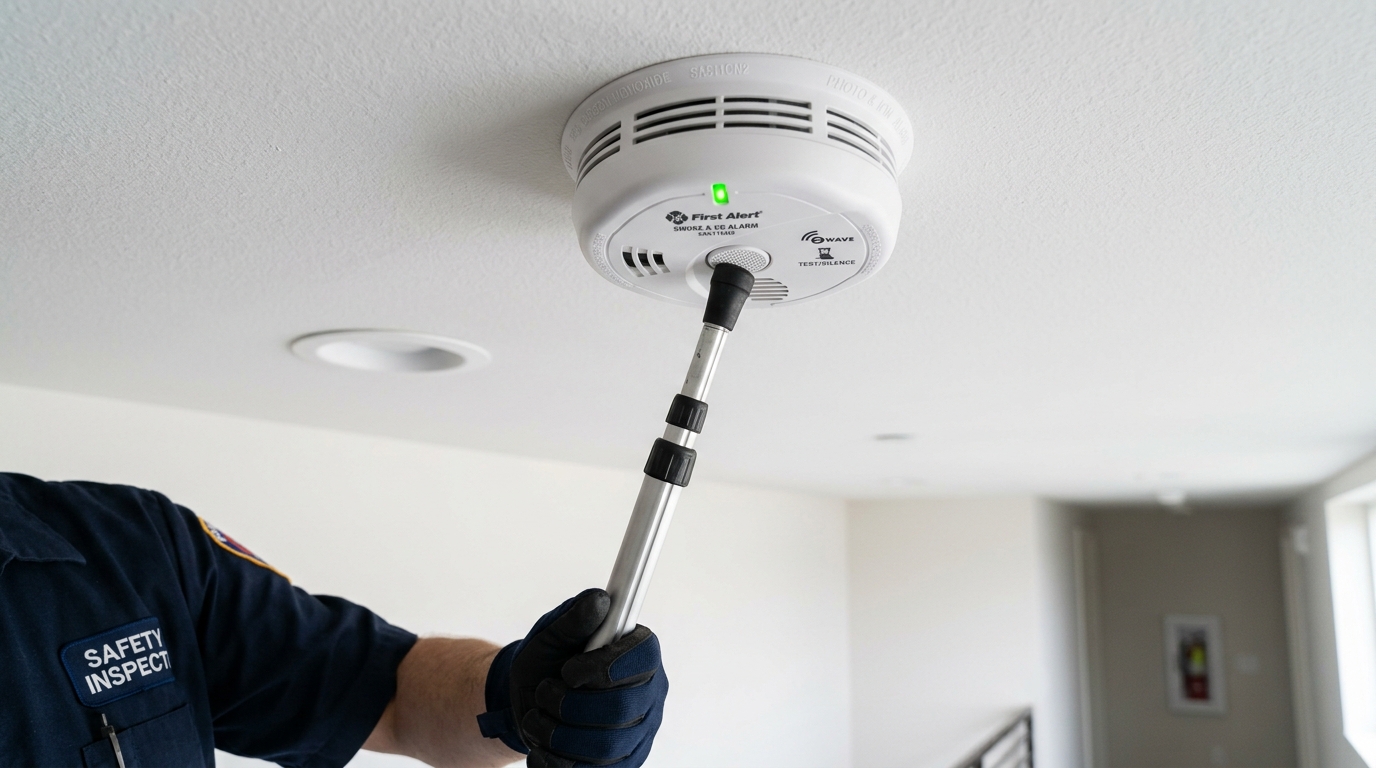
A "smart" smoke alarm is not a safer smoke alarm. The detection happens the same way it has since the 1970s, a photoelectric sensor, an ionization chamber, or both. What "smart" adds is a phone notification, remote silence, and self-test history. Those features earn their cost in specific situations. For the average homeowner, a 10-year sealed non-smart alarm with a freshly-tested battery is the life-safety win. Don't let me upsell you into a feature you won't use.
The quick picks (if you don't want to read the rest)
| Need | Pick | Price |
|---|---|---|
| Best overall smart | First Alert SC5, Google's official Nest Protect replacement | ~$130 |
| Best budget (not smart, but the right tool) | Kidde Detect 30CUD10 10-year sealed smoke + CO combo | ~$60 |
| Best high-end (smart speaker + alarm) | First Alert Onelink Safe & Sound | ~$220 |
| Best ultra-budget smart | X-Sense XS01-WT | ~$25-35 |
| Best for whole-home interconnect (no smart needed) | First Alert SA511CN2-3ST 3-pack | ~$110 |
How I picked these
Five things matter on a smoke alarm. In order:
- Sensor type. Photoelectric for residential, slow smoldering fires are the night-time killer (couch upholstery, electrical wiring in a wall, an overheated appliance left on standby). Ionization-only alarms underperform on those. The good 2026 picks are photoelectric, dual-sensor, or photoelectric with a separate CO chamber.
- UL listing. Non-negotiable. UL 217 for smoke, UL 2034 for CO. Verify on the back of the unit before installing. There are cheap imports that aren't UL-listed and they shouldn't be in your house.
- 10-year sealed design (or pro hardwire). Sealed lithium = no annual battery hunt. Hardwired with backup = code-compliant in new construction. Replaceable-battery alarms work but you must replace the battery annually, and most people don't.
- Combo smoke + CO. One device, one mounting point. CO and smoke kill differently but in overlapping conditions (faulty furnace can do both). A combo unit halves your installs.
- Real-world track record. The number you don't see on a spec sheet: how the unit ages. Kidde and First Alert have been doing this for decades, the field knows their failure modes. New entrants may be fine. We don't have the years yet.
Smart features sit BELOW these five. If a smart alarm fails on sensor type or UL listing, I don't care how good the app is.
1. Best overall: First Alert SC5 Smart Smoke + CO
Google stopped making Nest Protect in February 2025. The Google Store now lists the First Alert SC5 as the recommended replacement, and First Alert engineered it to mount on the same base plate, meaning anyone whose Nest Protect is expiring can swap directly without unscrewing the ceiling mount. It works with the Google Home app. It uses photoelectric detection with a separate CO sensor. And it's priced at $129.99, the same number the Nest Protect launched at in 2013.
This is the unit I'd buy if my existing alarms were 8+ years old and I wanted to upgrade the whole house at once. The smart features are real (phone alerts when no one's home, self-test history in the app, remote silence for the kitchen burnt-toast event). The detection hardware is conservative and proven. And it's the only smart alarm currently sold with the explicit blessing of Google's smart-home ecosystem.
| Spec | Value |
|---|---|
| Sensor type | Photoelectric smoke + electrochemical CO |
| Power | Hardwired with battery backup OR battery-only models available |
| Smart platform | Google Home, Apple Home (via separate models) |
| UL listing | UL 217 (smoke), UL 2034 (CO) |
| Service life | 10 years from manufacture date |
| Backwards compat | Same base plate as Nest Protect |
- First Alert SC5 on Amazon — check current price on Amazon. Buy enough to cover every sleeping area + one per floor + one outside each sleeping area.
- First Alert SC5 on eBay, buy new listings only, the 10-year clock runs from manufacture.
- First Alert direct, same price, sometimes bundle deals on 3-packs.
2. Best budget: Kidde Detect 30CUD10 10-year sealed combo
This is the alarm I tell my own family to buy. It's a combo smoke + CO unit with a 10-year sealed lithium battery. No annual battery replacement. No Wi-Fi setup. No app to maintain. No subscription. You install it, write the install date on the back with a marker, and ignore it for ten years until it tells you it's expiring. At around $60 per unit, you get the fundamentals, detection and reliability, for less than half the SC5's price.
The Kidde Detect 30CUD10 doesn't have phone alerts, and that's fine for most households. If you're home when the alarm sounds, you hear it. If you're not home and the alarm sounds, the alarm is doing the only job that matters: alerting whoever IS in the house. Phone alerts are a nice-to-have, not a life-saver.
| Spec | Value |
|---|---|
| Sensor type | Photoelectric smoke + electrochemical CO |
| Power | 10-year sealed lithium |
| Smart platform | None |
| UL listing | UL 217 (smoke), UL 2034 (CO) |
| Service life | 10 years sealed, replace the whole unit at expiry |
| Maintenance | Button-test weekly per Kidde's data sheet, vacuum exterior with soft brush quarterly |
One note on sensor type: this unit is photoelectric on the smoke side, the sensor that detects slow smoldering fires sooner. Those are the more common night-time killer, so bedrooms and living areas are its home turf. Ionization sensing may catch fast flaming fires (grease, fuel) sooner, and industry guidance is to have both types in the home. Add ionization or dual-sensor coverage near kitchens and garages when the budget allows for split coverage.
- Kidde Detect 30CUD10 on Amazon — check current price on Amazon. Most efficient way to cover a 3-bedroom home: 4-6 units (one per bedroom, one in hall, one per additional floor).
- Kidde Detect 30CUD10 on eBay, buy new listings only, sensors age on the shelf and old stock costs you useful life.
3. Best high-end: First Alert Onelink Safe & Sound
The Onelink is the rare smart-home product that earns its premium. It's a hardwired smoke + CO alarm AND an Alexa-enabled smart speaker. Mounted on the ceiling, it covers life safety and plays music. With Apple HomeKit and Alexa both supported, it fits into either ecosystem. Around $220 per unit, but you're getting a smart speaker you'd otherwise spend $100 on, so the safety hardware is effectively $120. That's competitive with the SC5 once you factor in the audio.
The case for the Onelink: if you're already mounting Sonos or Alexa speakers around the house, you're paying for the speaker anyway. Combining it with a code-required device that's already on your ceiling is clean engineering. The case against: it's hardwired-only, you need a wired smoke alarm circuit in the ceiling location, which existing homes may not have.
- First Alert Onelink Safe & Sound on Amazon — check current price on Amazon. Only buy if you have hardwired smoke alarm infrastructure to mount it to.
- First Alert Onelink Safe & Sound on eBay, buy new listings only, the 10-year clock runs from manufacture.
4. Best ultra-budget smart: X-Sense XS01-WT
X-Sense is a newer name in the category but the units are UL-listed, photoelectric, and ship with a 10-year sealed lithium battery. The XS01-WT model adds Wi-Fi phone alerts at ~$25-35 per unit, about a quarter of the SC5 price. The trade-off: less mature smart-home integration, smaller install base means fewer field-failure-mode data points, and the app is functional but not polished.
I'd recommend this for renters who want phone alerts without committing to a $130 fixture, or for outbuildings (detached garages, workshops) where you want smart coverage but the budget is constrained. For your primary residence, the SC5 is worth the price difference.
- X-Sense XS01-WT on Amazon — check current price on Amazon. Verify UL 217 listing on the unit before installing.
- X-Sense XS01-WT on eBay, buy new listings only, the 10-year clock runs from manufacture.
5. Best Kidde-ecosystem smart: Kidde Smart Smoke + CO
Kidde's smart smoke + CO alarm is the right buy when you already have Kidde alarms in the house and want to add smart features without replacing the entire fleet. It interconnects with existing Kidde hardwired alarms (the older non-smart models) via the same 3-wire interconnect. So you can swap one unit at a time, a mostly painless upgrade path that none of the other smart alarms support.
It uses photoelectric smoke + electrochemical CO. Wi-Fi enables push alerts via the Kidde app. No hub required. Around $75 per unit.
- Kidde Smart Smoke + CO on Amazon — check current price on Amazon. Best for existing Kidde-hardwired homes wanting incremental smart upgrade.
- Kidde Smart Smoke + CO on eBay, buy new listings only, the 10-year clock runs from manufacture.
Honorable mention, when "smart" isn't the point
If what you want is "when one alarm goes off, all of them go off", not phone alerts, this is the unit. Battery-only, no Wi-Fi, no app, just wireless mesh that links the alarms in the pack so any one alarming triggers all of them. The 3-pack at ~$110 is the cheapest path to whole-home alarm synchronization in homes without hardwired interconnect infrastructure. Many homeowners want THIS feature and don't need Wi-Fi.
- First Alert SA511CN2-3ST 3-pack on Amazon — check current price on Amazon.
- First Alert SA511CN2-3ST 3-pack on eBay, buy new listings only, the 10-year clock runs from manufacture.
What to skip and why
You'll see Nest Protect Gen 2 units on eBay and Amazon Marketplace for $90-150. Don't. The 10-year clock started when each unit was manufactured, NOT when you bought it. A Nest Protect manufactured in 2017 has 1 year of life left in it. The lithium battery in sealed units is also not replaceable. You're buying a $130 device that may die in months. Buy the SC5 instead.
If the brand isn't on a UL search-engine result, the unit isn't UL 217-listed. UL listing is the certification that the unit will reliably detect smoke at the threshold a smoke detector is supposed to detect smoke at. Without it, you're putting your family's life on the promise of a manufacturer with no chain of accountability. The savings aren't worth it.
Ionization alarms are great in kitchens, they catch grease fires fast. They UNDER-perform on smoldering fires (upholstery, mattress, electrical), which are the dominant night-time killers. The 9-volt-battery ionization alarm that came with a previous resident's house in 1998 is the alarm to replace first.
The Nest Protect question, what should I do with mine?
If you bought Nest Protect Gen 2 between 2015 and 2025, do this:
- Find the manufacture date. Pull the unit off the ceiling. The date is printed on the back. Add 10 years, that's the day it dies.
- If it's within 2 years of expiry, plan the replacement now. The SC5 mounts to the same base plate, so the swap is mechanically simple. Order one unit per existing Nest Protect.
- If it's expired or expiring this year, replace immediately. An expired smoke alarm is not an alarm, it's a piece of ceiling decoration.
- Keep the Nest Protect mount. The SC5 uses the same mount. You're not rewiring anything if you're already hardwired.
The most common reason a Nest Protect "feels" broken before its 10-year expiry: the lithium battery in non-hardwired units does drift toward end-of-life around year 7-8, and you'll start getting more frequent low-battery chirps. That's normal aging, not a defect. But if you're hearing it, the unit's reliability margin is shrinking. Treat year 8 as the practical replace-by date even if the manufacture-date math says 10. Same rule applies to ANY 10-year sealed alarm, not just Nest.
Where to put them, the layout most homes get wrong
NFPA 72 (the National Fire Alarm and Signaling Code) gives the minimum layout. The minimum saves lives, but it's not what I'd put in my own house. Here's the practical version:
- Inside every bedroom. One per sleeping area. Close the bedroom door at night, the alarm needs to be on the same side of the door as the sleeper. Code minimum is one outside each sleeping area. That's not enough if a fire starts inside a closed bedroom.
- Outside every sleeping area, in the common hallway. One per group of bedrooms. Catches fires originating outside the rooms.
- One per additional floor. Including the basement (especially the basement, utility rooms and old wiring live there).
- Near, but NOT in, the kitchen. 10+ feet from cooking appliances. In the kitchen itself you'll get nuisance alarms that train the household to ignore the sound, the absolute worst outcome.
- Near, but NOT in, the bathroom. Steam triggers false alarms. 10+ feet from the bathroom door is a reasonable minimum.
- NOT next to HVAC supply registers or ceiling fans. Forced air dilutes the smoke before the sensor sees it.
Related diagnoses
FAQ
What is the best smart smoke alarm for 2026?
The First Alert SC5 is the strongest pick for 2026: Google itself promotes it as the official Nest Protect replacement after discontinuing Nest Protect in February 2025. It mounts to the same base plate as the old Nest Protect, works with the Google Home app, and runs ~$130. If you don't need smart features at all, the Kidde Detect 30CUD10 10-year sealed combo at around $60 will outperform a cheap smart alarm in the fundamentals (detection + reliability).
Is Nest Protect discontinued?
Yes. Google stopped producing Nest Protect in February 2025. Existing units will keep working until their 10-year manufacture-date expiry, after which they must be replaced, the sensors degrade and are non-serviceable. The First Alert SC5 is Google's officially endorsed replacement and uses the same base plate, so swapping in expiring units is straightforward.
Do I need a smart smoke alarm?
Not for life safety, a basic NFPA 72-compliant alarm in every sleeping area, plus outside each sleeping area, plus one per floor, is the minimum code requires and the minimum that saves lives. Smart features earn their cost when you travel often, when you have an aging parent in another home, or when you have a hardwired system you can mesh with. If none of those apply, a 10-year sealed non-smart alarm is the better buy.
What's the difference between photoelectric and ionization smoke alarms?
Photoelectric alarms see slow smoldering smoke better (couch on fire, electrical fire smoldering in a wall). Ionization alarms see fast flaming fires faster (grease fire, paper fire). NFPA recommends dual-sensor units that include both technologies, or having both types installed. Most good smart alarms in 2026, including the SC5 and Onelink, are photoelectric. That's correct for residential, where smoldering fires are the more common night-time killer.
How often should I replace smoke alarms?
Every 10 years from the manufacture date, regardless of how it tests. The sensors degrade. The 10-year rule is NFPA 72 and is non-negotiable. Replace the entire set together, alarms in the same home are typically the same age, so when one fails the others are close behind.
Should I get a combo smoke + CO alarm or separate units?
Combos are usually the right answer in modern homes. One unit, one mounting point, one battery, one purchase decision. The exception: combo units have to be placed where both sensors work, that means ceiling or high-on-wall (smoke rises. CO mixes evenly with air). If you need CO detection low to the floor near a sleeping area for an at-risk household member, a separate plug-in CO detector covers that case better. The Kidde KN-COB-DP2 plug-in is the go-to.
Can I use a smart smoke alarm if I don't have Wi-Fi?
Most will still detect smoke and sound the local alarm, that's the safety-critical function. What you lose is the phone notification, remote silence, and self-test history. If you don't have reliable Wi-Fi, save your money and buy a 10-year sealed non-smart alarm. You're paying for a feature you can't use.
Are hardwired or battery smoke alarms better?
Hardwired-with-battery-backup is the gold standard and is required by code in most new construction. The hardwire provides constant power. The battery covers blackouts (when fires are most likely, storms, candles, generators). In existing homes without hardwire infrastructure, battery-only 10-year sealed alarms meet code and protect lives just as well, the upgrade isn't worth retrofitting unless you're already opening walls.
Will smart smoke alarms interconnect with my existing Kidde or First Alert alarms?
Within a brand and platform, yes. Across brands, almost never. Hardwired interconnect uses a standard 3-wire (hot, neutral, interconnect) and CAN cross brands, but the wireless mesh used by smart alarms is proprietary. If your existing hardwired alarms are 3-wire, you can mix brands. If they use proprietary wireless, you need to replace the whole set.